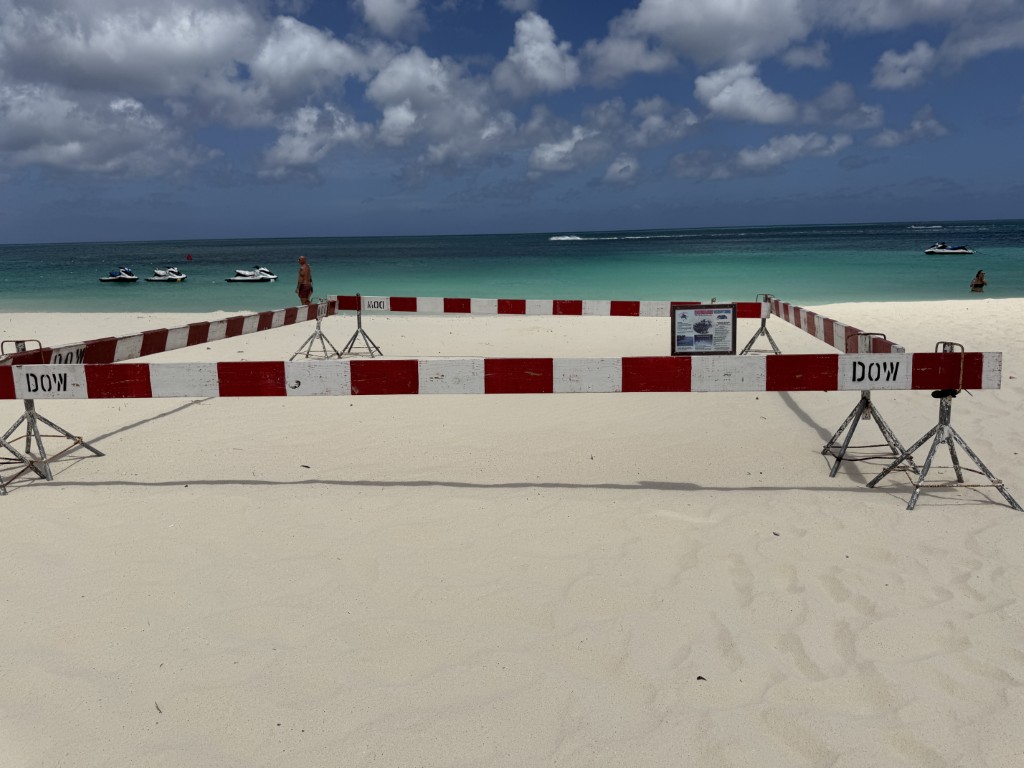
If you’re visiting Aruba during the months of March through November, you might come across small barricades with red and white fencing scattered around some of Aruba’s beaches. These barricades mark and protect the spot of a sea turtle’s clutch (nest).
Some of Aruba’s beaches are a favorite nesting place for several species of endangered sea turtles, including Leatherback, Hawksbill, Green, and Loggerhead species. They primarily nest on Eagle Beach, as well as Boca Grandi and the beaches within Arikok National Park, with occasional nests on Palm Beach and Malmok.
Our local sea turtles are a true wander to behold but do require respect on your end. Better understand how you can enjoy turtle nesting season and help us take care of Aruba’s sea turtles.
Sea Turtle Nesting
Adult female sea turtles come back to their natal beach every two to five years to lay their clutches of eggs (about 115 eggs on average) using the earth’s magnetic field to guide them. A single female can lay up to as many as eight nests in a single season. The incubation period is about 45 to 70 days, depending on the species.
If you are lucky to be visiting Aruba to see one of these gentle giants laying her eggs (March-September), or when a hatching occurs (May-November), it is a truly inspiring experience. TurtugAruba is Aruba’s local foundation that protects, monitors, and documents sea turtle activity on and around the island.
Tips to Protecting Aruba’s Sea Turtles
Here are a few tips they share to protect our sea turtles:
1. Lights Out for Turtles
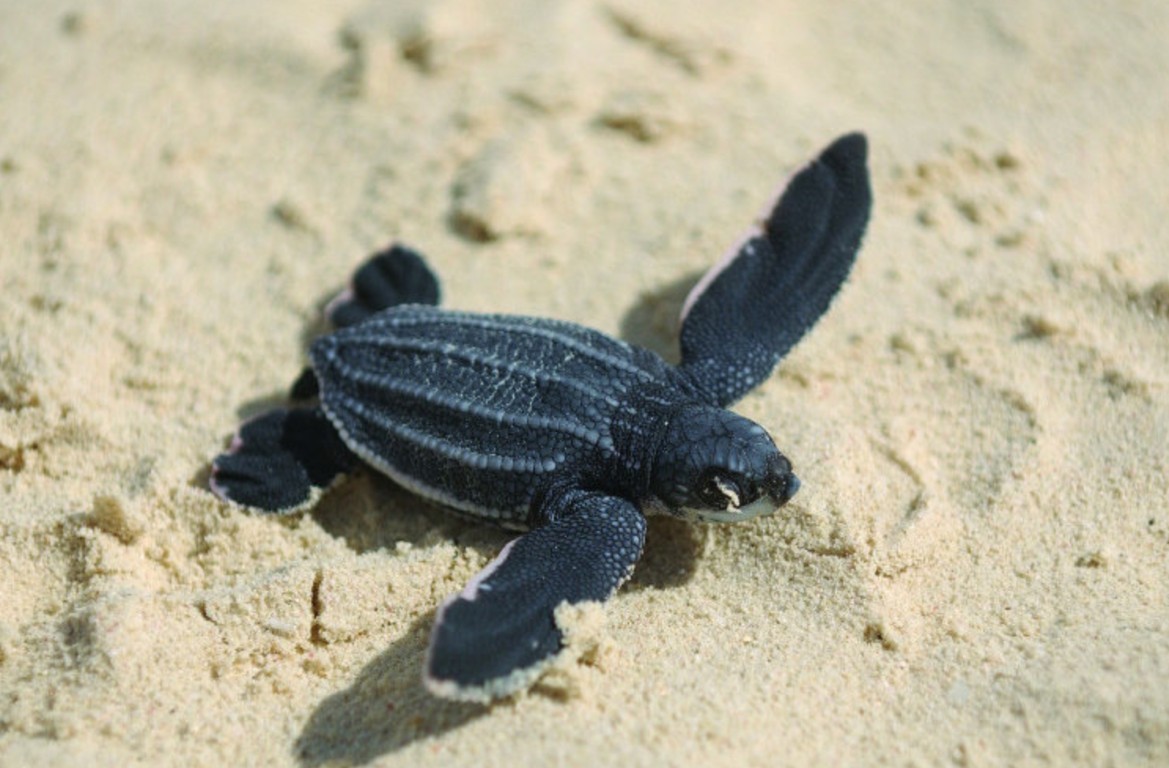
Nighttime activities and artificial lighting may deter adult females from nesting or disorient emerging hatchlings, leading them inland where they die of dehydration or are crushed by cars. So PLEASE keep all lights off, including flashlights, flash photography, and video equipment.
2. Do Not Drive or Litter on Beaches
Vehicles compact sand and make it difficult for turtles to dig into or out of the sand. Balloons, plastic bags, and other non-degradable litter can kill sea turtles that mistake it for food.
3. Remove Obstacles from the Beach
Obstacles such as beach furniture or recreational equipment may cause nesting females to abort their nesting attempt or may even trap nesting females or hatchlings.
4. Keep Distance from Nesting Females and Hatchlings
Watch a nesting turtle from a distance. Turtles are very shy and will easily leave without nesting. Leave hatchlings in their nest; they will exit the nest when they are ready. Let them crawl to the water on their own, allowing them to imprint on their home beach.
About TurtugAruba
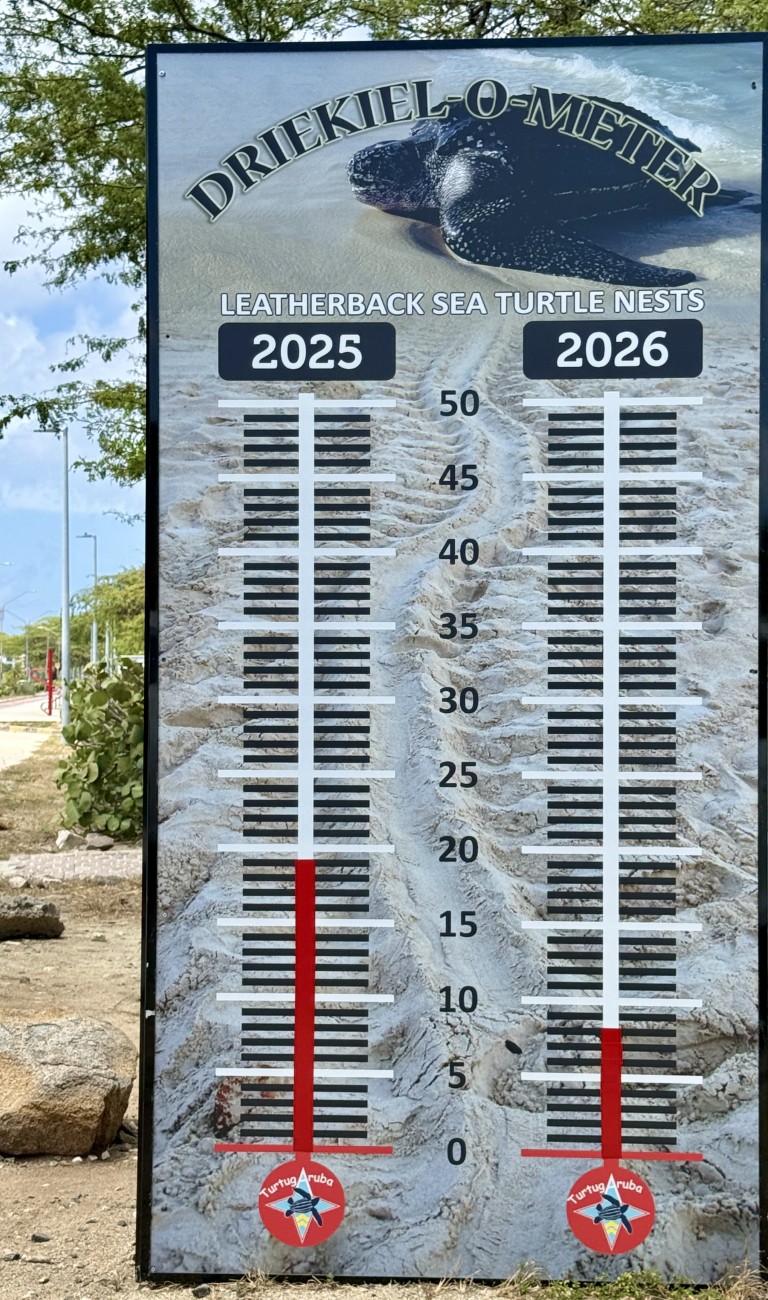
In the year 2000, nesting of sea turtles on Aruba’s beaches had dramatically declined. Founders Edith and Richard van der Wal, who have always been passionate about these endangered species, established Turtugaruba.
They collaborated closely with the Wider Caribbean Sea Turtle Conservation Network (WIDECAST) to address the issue. Thanks to the dedication of Turtugaruba and both local and visiting volunteers, the annual number of nests has now risen to an average of 70 or more.
Please note that some local tour operators are advertising “swim with the turtles” experiences. While this may seem harmless, it can cause stress and disturb them during feeding or resting times. Propeller injuries from tour boats are also a potential hazard for these endangered animals.
Keep an Eye Out for Sea Turtles
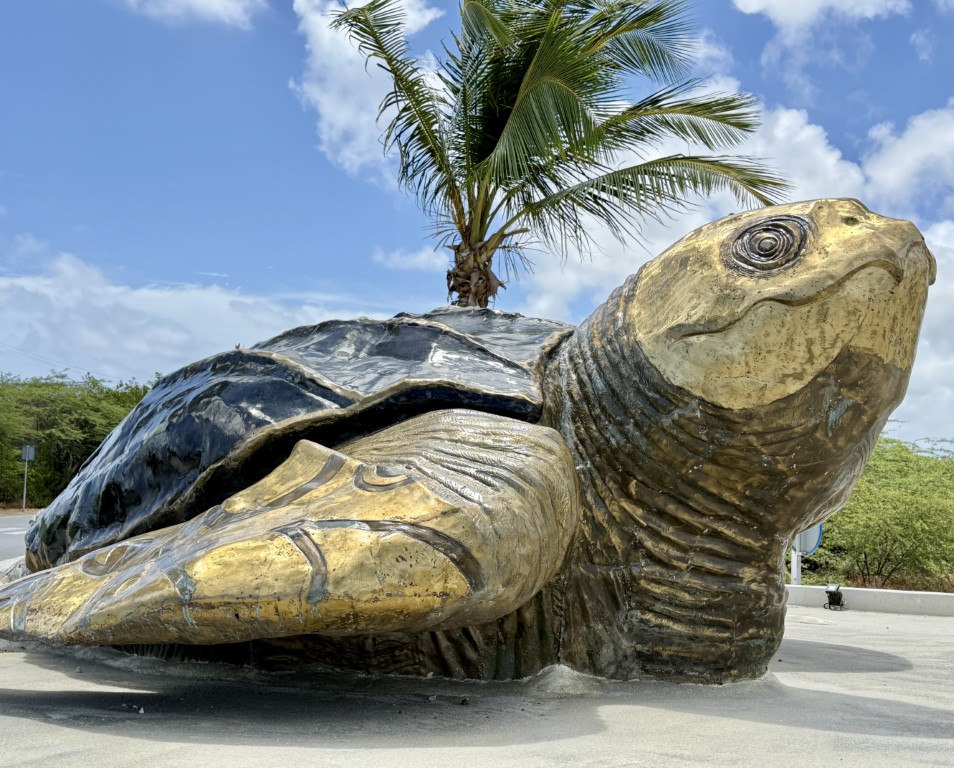
For those planning a trip to stay with us at Vacation Aruba anytime between March thru October, you might come across a sea turtle nest or even see one of these gentle giants in person. If you do, enjoy the moment but be sure to observe them at a distance.